
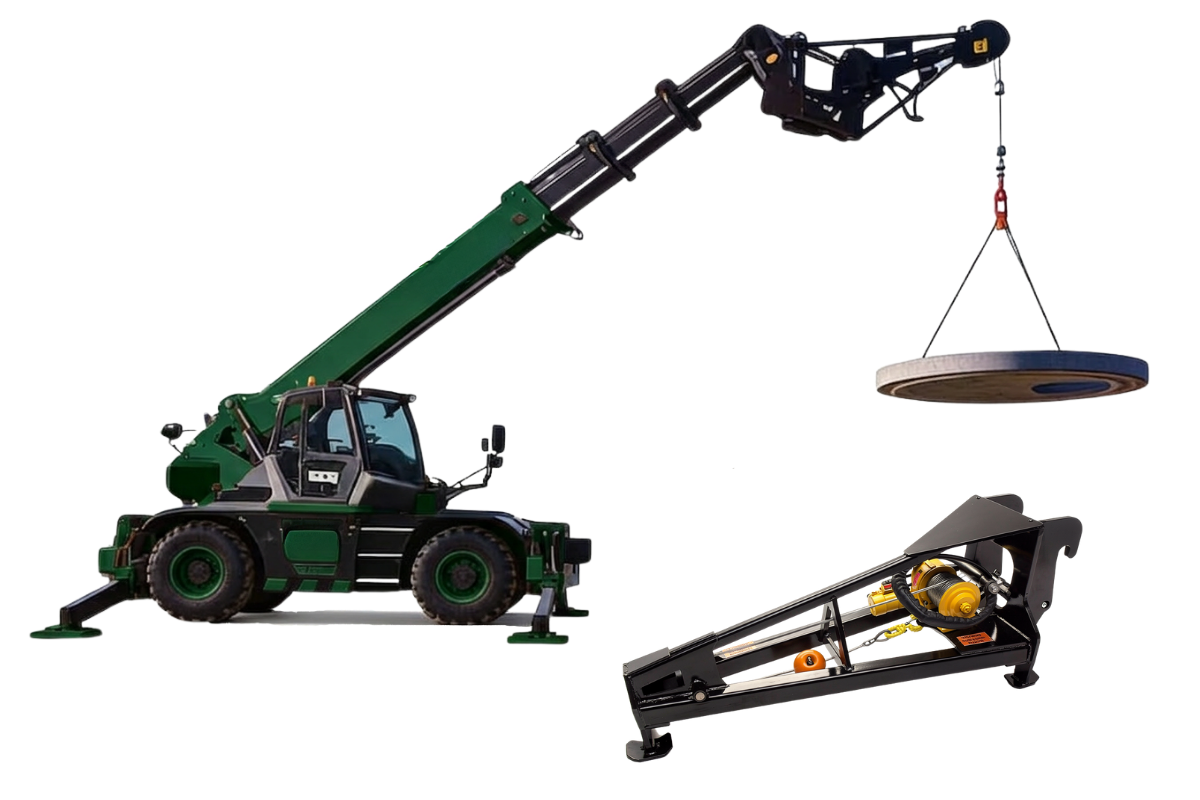
Rough terrain variable reach forklifts, also known as telescopic material handlers or simply, telehandlers, have been around in one form or another for nearly 70 years. Prototypes of “reaching forklifts” first appeared in Europe in 1957 while machines with similar designs showed up in the US around 1959. By the late 1970s, what we would recognize today as modern telehandlers, were well on their way to becoming the omnipresent industry staples they are today.
The popularity of telehandlers across so many market segments from general industry to construction, to agriculture and beyond, is due to the many capabilities their design and functionality make possible. It’s hard if not impossible for other equipment types to match their power, adaptability, operating range and ability to navigate and operate on unimproved, rough terrain surfaces. When you add the fact that numerous work attachments are readily available to handle a diverse range of tasks including material handling, personnel elevating, load hoisting and even earthmoving applications, you begin to understand - telehandlers appear to be in a class by themselves. Which brings us to what has become a bit of an issue in the industry lately, which begs the question, what exactly is a telehandler?
Since the industry standards we are required to comply regarding the design, construction and safe use of telehandlers, being ANSI B56.6 and CSA B335, are both forklift standards, the answer may seem simple, a telehandler is a forklift. This is sound logic, but only as long as it’s being used as a forklift and was mentioned earlier, it can be used for so much more. Remember, you can strap on any number of specialty work attachments to a telehandler, many of which can potentially, and significantly, affect the interaction between the load and the machine and, by association, how the machine is operated. In fact, there are many who argue that certain attachments not only affect how the machine is used, but the identity of the machine itself. For example, a telehandler fitted with a personnel elevating platform is no longer a forklift, it’s a mobile elevating work platform (MEWP). One fitted with a material bucket is now an earthmover and one fitted with a crane attachment, is now a mobile crane. From this perspective, the identity or classification of the equipment is not determined as much by its design as it is by its applied use.
This raises issues, not the least of which is operator training. If a telehandler is being used for tasks that fall outside the typical material handling tasks commonly associated with forklifts, then it follows that operators must receive specific training in how to perform those atypical tasks safely. This is especially important when crane operations with telehandlers are among those tasks because in most cases, the operators performing them need to be certified as crane operators.
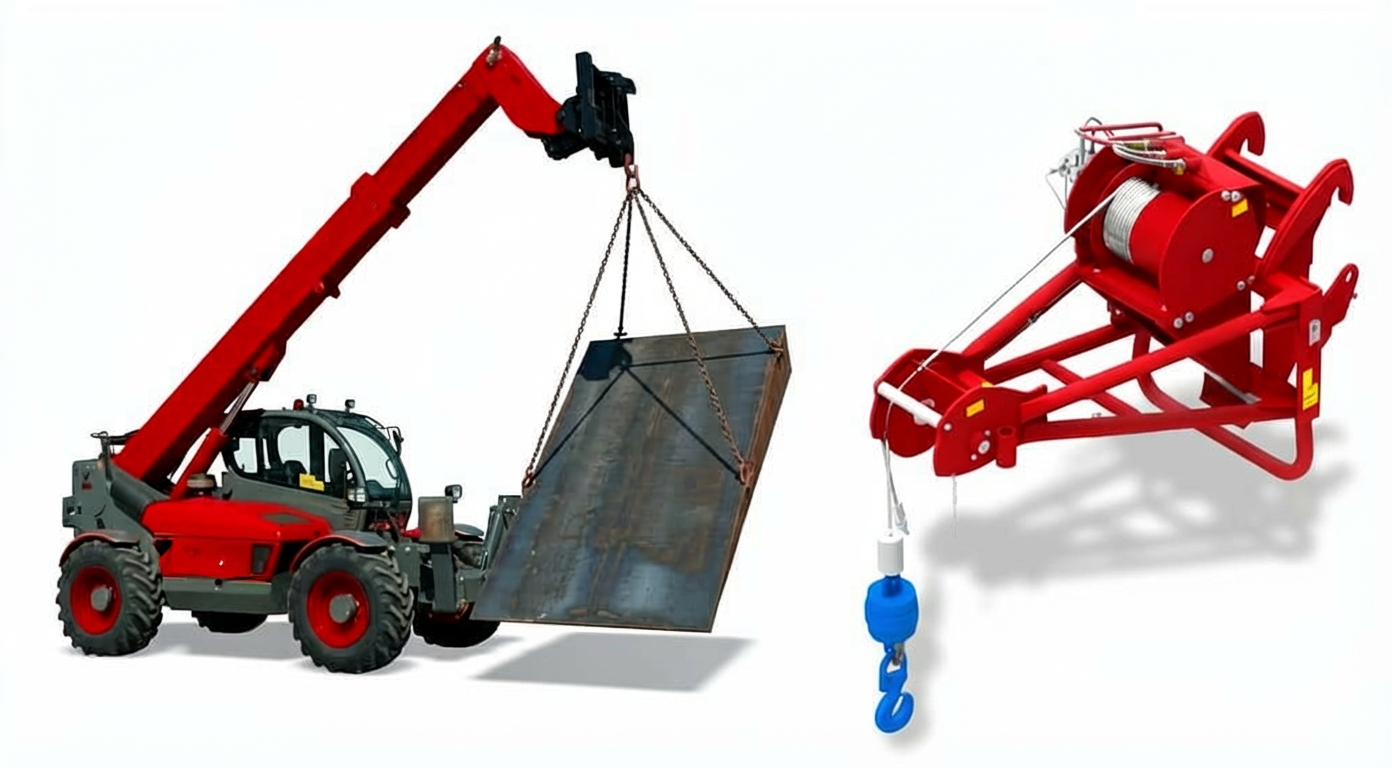
When exactly a forklift becomes a crane in the eyes of regulatory agencies throughout North America vary. However, the following criteria is widely accepted across most regulatory jurisdictions that a forklift may be defined as a crane if it:
- Is equipped with a boom and powered hoist (winch/drum).
- Engages the load from above using a hook or sling attached to rigging.
- Can raise and lower a load vertically without moving the mast/boom.
- Can move a suspended load horizontally.
Free rigging, which involves using chains or slings laid across the forks to engage and carry a load from above usually does not trigger crane operator training requirements as long as no powered hoist, which seems to be the single most significant element in defining a forklift as a crane, is used. In addition, many regulatory jurisdictions require the written approval of the manufacturer and/or a proper engineering assessment prior to free rigging operations.
It must also be noted that some regulatory agencies are not as picky as this and simply state that if a forklift is being used as a crane, then it’s a crane, regardless of whether it is a telehandler, vertical mast forklift or what attachment is used. In fact, some of those same regulatory bodies refer to telehandlers, particularly rotating telehandlers, as “multi-use lifting equipment” rather than forklifts. This points out their reluctance to consider them simply as forklifts, especially when they are configured for crane work.
In any case, specific work requires specific training and if where you are, that work involves craning, you really should consider having certified crane operators to do it.
General Notes:
- The International Organization for Standardization (ISO) publishes several standards containing specific information on the design, construction and safe use of rotating (slewing) telehandlers, including:
copyright © IVES Training Group 2022 All Rights Reserved.

