The IVES Update Newsletter is a highly informative monthly e-newsletter. It contains up-to-date industry information, regulatory updates, stories from the field, upcoming program dates, What’s Wrong With This? photos, incident reports, our interactive “Ask Bob” question and answer column, new product details and much more.
Whether you're interested in forklifts, mobile elevating work platforms, loaders or excavators – we’ve got you covered. Want to receive it directly to your inbox? Sign up for our IVES Update e-Newsletter!
Year:
In this issue, we will be covering:
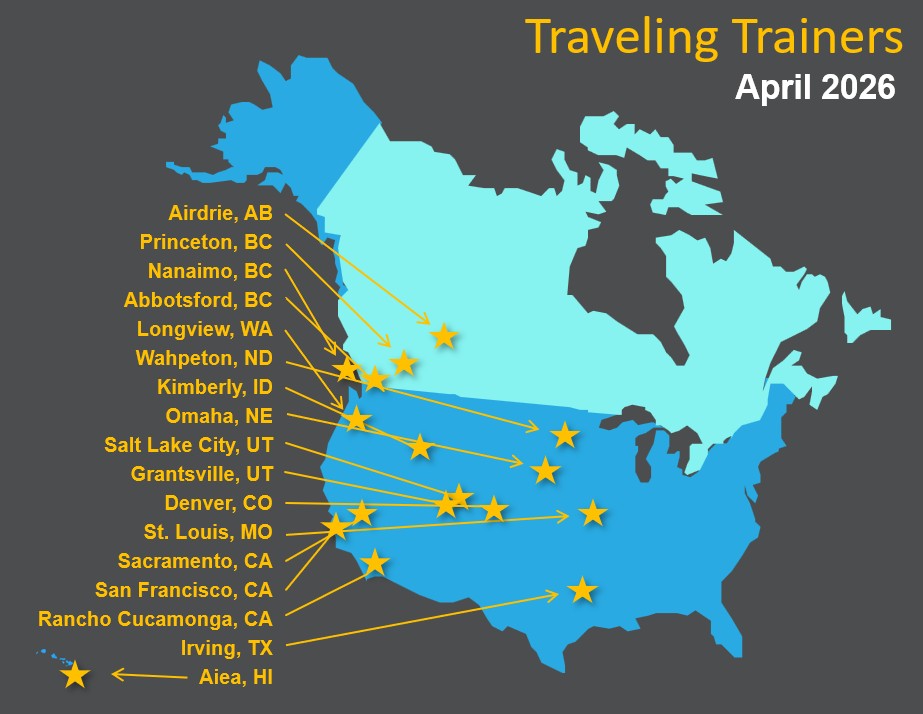
But first, check out all the places we are delivering training this month...
CSA B335 Update
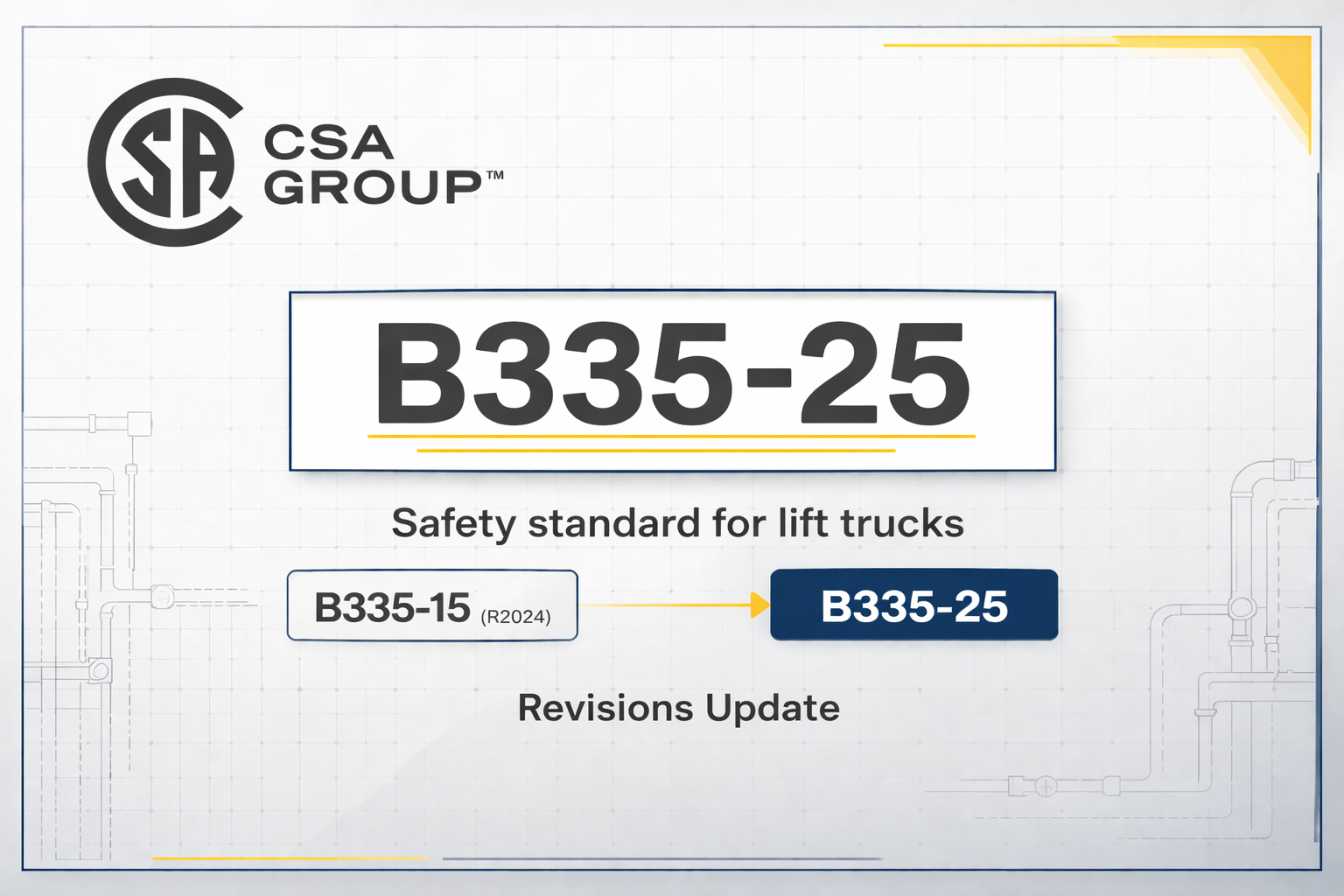
If you train in Canada didn’t know already, the CSA Group released, CSA B335-25 Safety Standard for Lift Trucks, in May of 2025 which replaced the previous version, B335-15 (R2024). Of course, we reviewed the newest version immediately and if there were any significant changes to report, we certainly would have made you aware of them long before now.
In any case, enough time has passed, and since industry practice has been for new/revised requirements to take effect one year after being released, the time is right for a brief overview of the changes.
NOTE: Please be mindful of the fact that IVES is an organization that respects copyright laws and as such, this article contains no direct quotes or excerpts from the subject standards.
General Requirements
This is section 4 of the standard and is the one that received the highest total number of changes. Some of these changes were editorial in nature, meaning they are changes to existing content that have no effect on its fundamental meaning. For example, some information that existed in the previous version as a “Note” now exists as a clause or sub-clause, and vise vera. Changes like this are noted at 4.4 - Hazard identification, 4.8.6.1 - Stability requirements for high lift trucks and 4.8.6.2 - Conditions affecting stability and 4.9.12.2 – Operator’s responsibility when leaving position.
Some of the more significant changes were as follows:
4.8.8.1 – addressing the determination stopping distance on grades was completely dropped from the 2025 version.
4.9.3.1(f) – addressing the operator’s view in the direction of travel now contains provision for the use of a spotter.
4.9.13.5 – Requirements for the storing and handling of hydrogen gas, is a brand-new requirement.
Design and Construction
This is section 5 of the standard, where new requirements were added for the design and construction of: personnel and burden carrier trucks, operator-controlled industrial tow tractors, manually propelled high lift trucks and vehicle-mounted forklift trucks, in compliance with ANSI B56 standards, were added at 5.4 through 5.7 of the section.
Operator Training Requirements
This is section 6 of the standard and the change to report is at:
6.1.29a) – The definition of “Theory” has been expanded to include the use of online and virtual reality (VR) delivery methods for training.
Qualifications of the lift truck trainer
This is section 7 of the standard where an interesting addition was made to:
7.2 Qualifications – Following the first paragraph after subsection c), another paragraph defining the requirements for lift truck trainers to receive retraining at three-year intervals providing that such training does not conflict with any local regulatory requirements, was added.
We will have a more information on this as well as other required trainer qualifications under this standard as they relate to WHMIS, TDG and fall protection training.
Appendices
Beyond the changes made to the main body of the standard, some additions to the appendices were also made, including:
Annex G – An appendix that addresses the “exclusion zones” to prevent access by non-essential personnel/equipment in identified, high risk areas and,
Annex H – An appendix addressing the use of single-use pallets in the workplace.
Well, there you have it. As you can see there is nothing particularly significant to note unless you are one of the few that utilize hydrogen gas to fuel the forklifts at your workplace.
Keep an eye out for future IVES Updates for follow-up articles and continued industry news.
- The IVES Team A Saskatchewan court has fined Air Liquide Canada Inc. $100,000 after a worker was seriously injured when struck by a forklift near Saskatoon.
The incident occurred on June 21, 2023 at a worksite near the city, according to a release from the provincial government.
The worker was hit by a moving forklift and sustained serious injuries. The release did not provide additional details about the nature of the injuries or the worker’s current condition. No information was given on the worker’s role, the specific location, or the time of day the incident occurred.
On Feb. 10, 2026, Air Liquide pleaded guilty in Saskatoon Provincial Court to one count under subsection 9‑22(6) of The Occupational Health and Safety Regulations, 2020. The provision requires an employer at a place of employment to develop and implement a traffic control plan to protect workers from traffic hazards.
The company admitted that it failed to develop and implement such a traffic control plan, and that this failure was linked to the serious injury of the worker involved. One additional charge laid under the same regulations was withdrawn as part of the proceedings, the province said.
The court imposed a base fine of $71,428.57 and added a victim fine surcharge of $28,571.43. The combined financial penalty totals $100,000.
The prosecution was brought under The Occupational Health and Safety Regulations, 2020, which place explicit obligations on employers to identify traffic hazards and control the interaction between workers and powered mobile equipment. Subsection 9‑22(6) specifically addresses the need for a formal traffic control plan, signalling that the province views this as a critical component of employer due diligence.
Here are some factors of work organisation that can contribute to forklift truck incidents, according to the Canadian Centre for Occupational Health and Safety (CCOHS):
And here are the factors related to forklift operation that can contribute to incidents, according to the government agency:
 Q: Hi Bob,
Does a Class 5 Forklift have a ROPS (Rollover Protective Structure)?
A: Thanks for checking in with Ask Bob!
I have yet to see a Class 5 forklift with a ROPS as typically, only calss 7 forklifts are equipped by the manufacturer with a ROPS, all other classifications are usually fitted with a FOPS. The easiest way to tell a class 5 from a class 7 is on the data plate. Look for small print near the bottom (usually) of it and it will state what ANSI standard it was built to. If it is B56.1, it is a class 5 so FOPS-equipped. If it says B56.6, then it is a Class 7 vertical mast forklift. Also, any powered mobile equipment equipped with a ROPS has to have a a plate or decal on it identifying it as ROPS-equipped and listing the design and construction standard(s) it complies with.
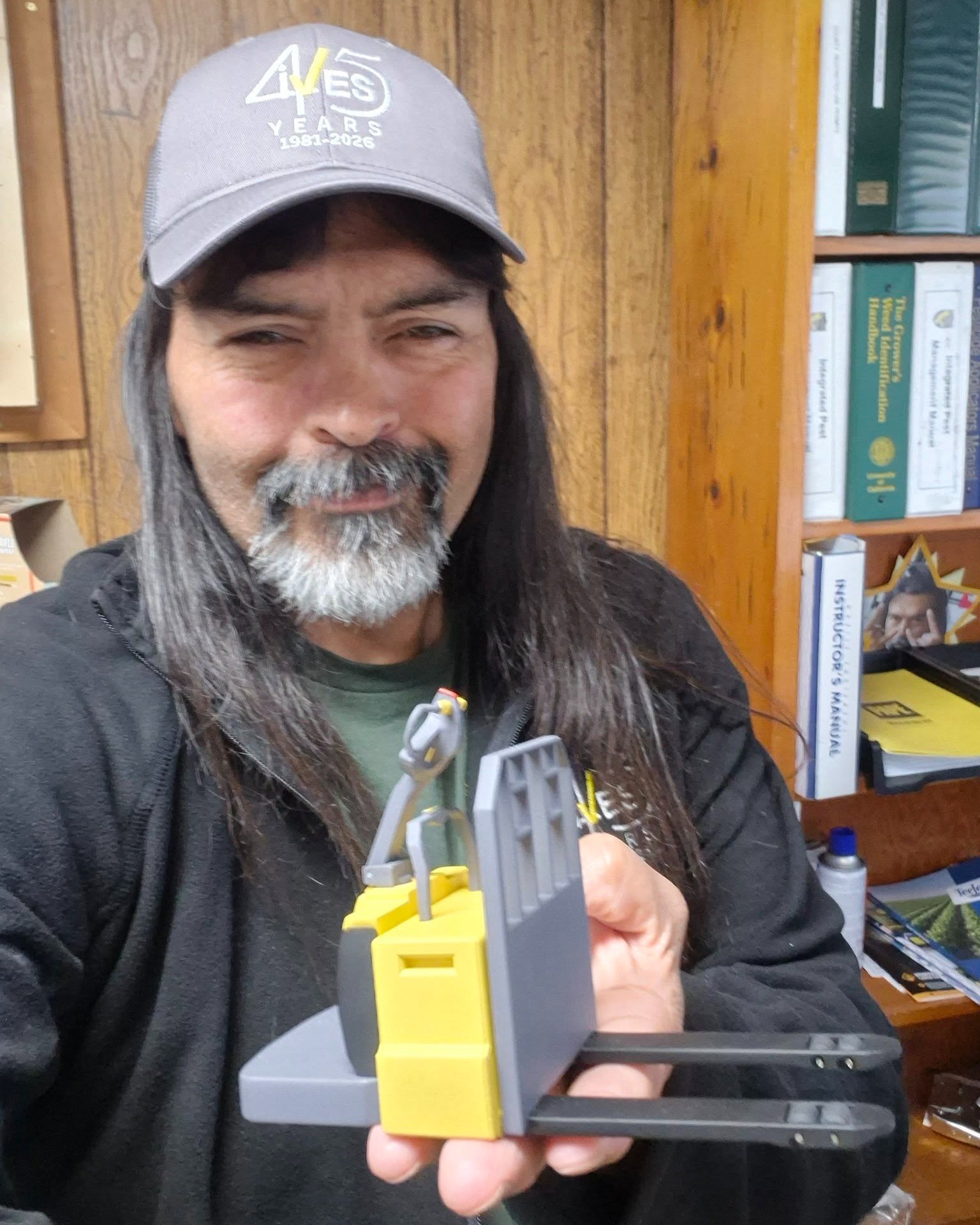
We are pleased to announce that Randall Garewal has won a new Powered Pallet Truck model along with our brand-new 45 year gear!
Make sure you join this month's contest for a chance at getting a 35% discount towards any of our Open Enrollment Train the Trainer programs!
All you need to do to enter in the contest is leave a comment on our April 1st social media post!
 "I loved the program, will use the knowledge I have received to greatly increase the safety and efficiency of my forklift training program at work."
David O, Premium Forklift Trainer Certification
"Very good program, will definitely make our goal of a standardized mobile equipment training program an almost instant reality!!"
Ashley E, Custom Train the Trainer Certification
"Excellent course! The trainer was very knowledgeable and made the course entertaining and very educational."
Carl B, Premium Combo Trainer Certification
copyright © IVES Training Group 2022 All Rights Reserved.