The IVES Update Newsletter is a highly informative monthly e-newsletter. It contains up-to-date industry information, regulatory updates, stories from the field, upcoming program dates, What’s Wrong With This? photos, incident reports, our interactive “Ask Bob” question and answer column, new product details and much more.
Whether you're interested in forklifts, mobile elevating work platforms, loaders or excavators – we’ve got you covered. Want to receive it directly to your inbox? Sign up for our IVES Update e-Newsletter!
Year:
In this issue, we will be covering:
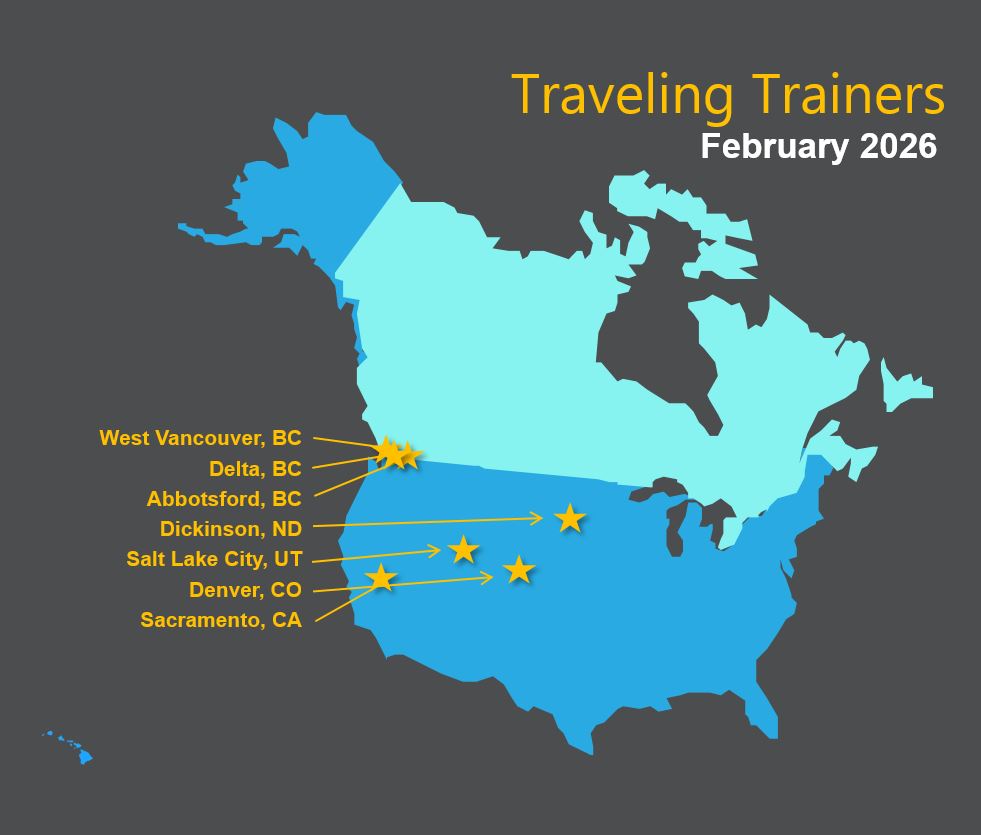
But first, check out all the places we are delivering training this month...
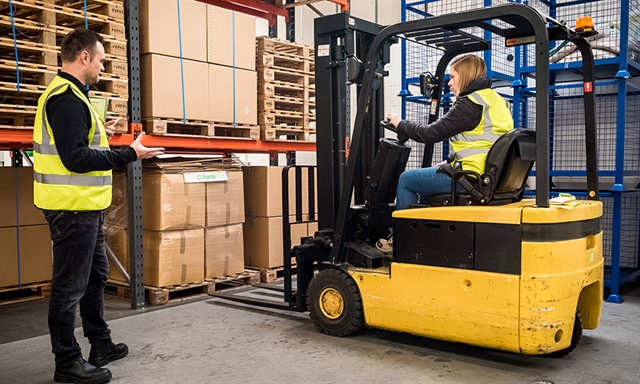
Regardless of what you do for a living, it’s human nature to look for ways to make tasks easier and less time-consuming. If we believe we can still achieve a similar outcome, we will often seek the path of least resistance to get there.
After becoming accustomed to completing the same tasks day-in, day-out, our minds begin to filter out information, or parts of the process that we don’t believe are important. For those working with or around materials handling equipment (MHE), the results of this “shortcutting" can be fatal.
If, in the course of your working day, you cut corners, but nothing bad happens and you still achieve the same outcome as a result, these shortcuts can subconsciously be accepted as more efficient methods.
When applied to forklift operation, over time, you may begin to think that applying the hand brake prior to using the hydraulics only slows your progress, or that turning with a raised load is just as effective.
And as well as skewing your own perceptions of safety, seeing a colleague cutting corners could lead others to adopt that same poor behaviour, further increasing the level of risk onsite.
But just because something bad hasn’t happened yet, it doesn’t mean it won’t. Should an accident occur because the time wasn’t taken to use the handbrake, line up the load before lifting or set a good example to others, the consequences have the potential to be incredibly serious, wherever MHE is involved.
This is where positive friction comes into effect – think of it as placing tiny hurdles at critical moments to reduce risk.
We already accept this concept throughout our everyday lives.
Speed bumps on residential streets, child-proof caps on medicine bottles and car seatbelt chimes are all examples of positive friction.
When it comes to working with MHE, safety and compliance simply cannot be overlooked. The potential risks attached to bad practice around heavy machinery such as forklifts are far too high.
Taking a proactive approach is key, starting with suitable training for those working on or alongside MHE from a recognised, accredited provider.
But what more can be done to encourage compliance day to day?
By introducing positive friction, there are many ways that safety measures can be applied within forklift operations to deter bad practice.
Businesses can choose from a huge range of safety devices available for use on sites, including cameras, floor markings and pedestrian barriers, to name just a few.
But perhaps the most influential measure that you can implement to ensure best practice is maintained in the long term is proactive management.
Often overlooked but vitally important, regular monitoring is key to combatting any complacent attitudes that may develop over time and compromise the day to day safety of your operations.
For your leaders to carry out effective monitoring, they must be able to spot bad behaviour and nip it in the bud.
As ACOP L117 states, supervisors must be armed with “enough training and knowledge to recognise safe and unsafe practices.”
After all, those managing your operations set the standard, so it’s vital that they have the confidence to step in and uphold safety when required.
Dedicated, forklift-focussed training is available for those in these specific roles and, in our experience, feedback suggests that our course has significantly boosted operational safety and awareness.
There are many incremental changes you can make within your operations to encourage best practice but, by equipping your managers to rectify bad practice, you will empower them to provide the ultimate form of positive friction.
Via ongoing monitoring, your supervisory staff can substantially reduce risk, preventing forklift accidents before they happen.
Source: Forklift Action A paper packaging manufacturer has been fined more than £433,000 after a worker suffered a severe skull fracture and permanent injuries when a 4.5 ton machine fell on him in an "entirely preventable" accident.
Matthew King was working for Multi Packaging Solutions UK Limited at its East Kilbride site on 31 October 2023 when he was struck on the head while working underneath the machine.
The 39-year-old sustained a severe skull fracture, bruising to his head and nerve damage to the left side of his face, leaving him with permanent health problems.
The Heath and Safety Executive (HSE) found "no safe system of work" was in place at the site for carrying out such work.
King was part of a team relocating the machine from a warehouse to a storage area.
The machine weighed approximately 4.5 tons and measured 1.56 by 4.15 metres, but had no lifting or anchoring points.
Workers had improvised a system involving lifting the machine with a forklift, placing skates underneath, and pulling it forward.
It had already slid off the forks at least twice before the incident, where it slid from the forks again and struck King - who was trying to secure a wheel on the underside - on the head.
The accident has left him with permanent double vision, loss of peripheral vision, facial palsy and hearing loss as a result.
He is also unable to drive, has required multiple surgeries and ongoing mental health support.
The HSE report found moving a machine of this size and weight was not a regular task at the site and there was no established system of work in place for it.
It ruled the lifting operation had not been properly planned by a competent person, while the characteristics of the load, including its weight, size, centre of gravity and lifting points, had not been adequately assessed.
HSE inspector Ingrid Grueso, said: "This incident was entirely preventable. The company failed to properly plan the lifting operation or implement a safe system of work.
"Mr King has been left with life-changing injuries including permanent damage to his eyesight, hearing and facial movement. He has had to sell his car as he can no longer drive safely and now relies on his wife to transport him and their three children.
"Employers must ensure that lifting operations are properly planned by a competent person and carried out safely. This is especially important for non-routine tasks involving heavy or awkward loads."
The Nottingham company - now part of the Smurfit Westrock firm - pleaded guilty to breaching Regulation 8(1)(a) and (c) of the Lifting Operations and Lifting Equipment Regulations 1998.
It was fined £433,333 and ordered to pay a victim surcharge of £32,500 at Hamilton Sheriff Court.
 Q: Hello, I have a company inquiring about recertification. Previously the training was done by a different company.
My question is if the course they took was not IVES, can I still just recertify them with the IVES documentation?
A: There are no official restrictions on using our training materials after initial training has been conducted using other training materials but I wouldn’t recommend it.
Our requalification materials are based on our initial qualification materials, so it would certainly be better if your operators were qualified and requalified using training materials from the same source.
That way, you always know that the basics were covered properly during initial training.
Where other, unknown training materials were used initially, who knows what was covered and whether it was accurate?
I would suggest doing initial training over again to have all documentation in order (this is in their best interest) and then doing requalifications thereafter using the same source for materials.
 "Much more thorough and detailed than what I have had in previous train-the-trainer programs."
Adam A, Premium Combo Trainer Certification
"Out of the four trainer groups I am studying under the IVES model is the most complete step by step I have seen so far."
Jeff C, Loader Group Trainer Certification
"It was an incredible experience filled with plenty of challenges and the trainer kept it interesting and fun!"
Jose B, Custom Program Trainer Certification
copyright © IVES Training Group 2022 All Rights Reserved.